

Restaurant Drink Pricing Strategies: How to Increase Profits Without Selling More Drinks
Learn smart restaurant and bar drink pricing strategies that increase profit margins without raising sales volume. Discover how pricing psychology, menu engineering, and premium positioning can boost beverage revenue.
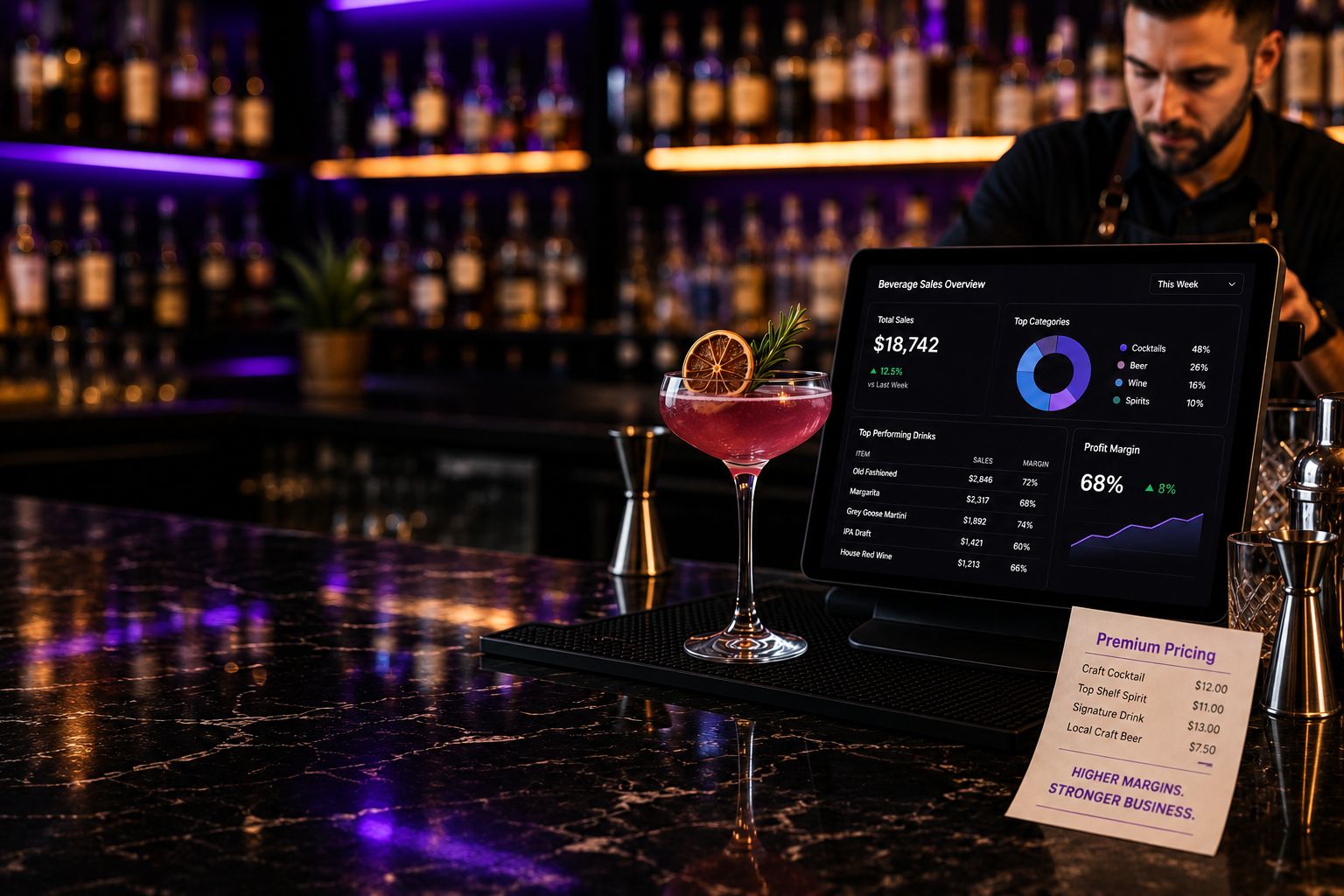
Increasing profits doesn’t always require selling more drinks.
Many restaurants and bars focus on attracting additional customers or boosting beverage sales, but one of the biggest opportunities often lies in pricing strategy. Small adjustments to how drinks are priced can significantly improve profit margins without changing customer traffic or increasing marketing spend.
This updated guide expands on Buzztime’s original article by exploring modern drink pricing strategies, consumer psychology, and revenue optimization techniques that restaurants and bars can use in 2026.
Why Strategic Drink Pricing Matters
Many operators still rely on simple markup formulas.
For example, they may apply the same multiplier across every premium spirit or beer category.
While this approach is easy to manage, it often leaves money on the table.
Modern POS systems and restaurant analytics now allow operators to price individual products based on customer demand, perceived value, and local competition instead of using a one-size-fits-all pricing model.
Price Based on Perceived Value, Not Just Cost
Guests don’t always evaluate drinks based on wholesale cost.
Instead, they consider:
- Brand reputation
- Quality
- Exclusivity
- Popularity
- Experience
- Status
If customers already perceive a spirit or cocktail as premium, they are often willing to pay more without significantly affecting demand.
Strategic pricing recognizes customer perception rather than relying solely on cost-plus pricing.
Understand Price Sensitivity
Not every customer reacts to price changes the same way.
Generally:
Value-focused customers
Often compare prices before ordering and may choose another venue if entry-level drinks become too expensive.
Premium customers
Are usually less concerned with small price differences and are more interested in quality, experience, or their preferred brand.
Understanding these buying behaviors allows restaurants to price products more effectively.
Avoid Blanket Pricing Across Categories
Instead of charging identical markups for every premium product, evaluate each item individually.
Consider factors such as:
- Local demand
- Brand recognition
- Competitor pricing
- Customer preferences
- Profit margin
- Sales volume
Modern POS systems make individual pricing much easier than it was years ago.
Monitor Your Competition
Competitive pricing is still important—but only for the products customers compare most frequently.
Pay particular attention to:
- Well spirits
- Domestic beer
- Popular draft beers
- House wine
- Entry-level cocktails
For premium products, customers often prioritize brand preference over price.
Your goal isn’t to be the cheapest, it’s to offer pricing that matches the value guests expect.
Optimize Pour Sizes
Pour size directly affects profitability.
Many bars unknowingly reduce profits through inconsistent pours.
Standardized recipes help:
- Control costs
- Improve consistency
- Simplify training
- Deliver predictable guest experiences
- Reduce waste
Even small differences in pour size can have a significant impact over thousands of drinks served each year.
Design a More Profitable Drink Menu
Menu engineering isn’t limited to food.
Arrange your beverage menu to highlight:
- Signature cocktails
- High-margin drinks
- Seasonal specials
- Premium upgrades
- Limited-time offerings
Visual hierarchy and descriptive language naturally guide customers toward profitable choices.
Train Staff to Recommend Premium Options
Guests often appreciate knowledgeable recommendations.
Rather than asking: “Would you like anything else?”
Train staff to offer specific suggestions such as:
- Premium spirit substitutions
- Signature cocktails
- Wine pairings
- Craft beer recommendations
- Specialty after-dinner drinks
Personalized recommendations feel helpful while increasing average check size.
Review Pricing Regularly
Supplier costs, customer preferences, and local competition change over time.
Review your beverage pricing regularly by monitoring:
- Profit margins
- Sales trends
- Ingredient costs
- Competitor pricing
- Customer feedback
- Seasonal demand
Small adjustments made consistently often outperform major price increases implemented all at once.
Technology Makes Pricing Smarter
Modern restaurant technology provides valuable insights into beverage performance.
Many POS systems now help operators analyze:
- Best-selling drinks
- Profit margins
- Sales by daypart
- Inventory usage
- Customer buying patterns
- Promotion performance
These insights make pricing decisions more data-driven and less dependent on guesswork.
Keep Guests Engaged While They Enjoy Another Round
One of the simplest ways to increase beverage revenue is to encourage guests to stay a little longer.
Interactive entertainment keeps customers engaged between rounds, during happy hour, and while watching sports or spending time with friends.
Longer visits often lead to additional drink orders and increased food sales.
How Buzztime Helps Increase Beverage Sales
Buzztime transforms ordinary visits into memorable experiences that naturally encourage guests to spend more time and often more money at your venue.
With Buzztime, your venue can offer:
Interactive entertainment helps create an energetic atmosphere where guests are more likely to order another drink, invite friends, and return for future events.
Request a free Buzztime demo today and discover how interactive trivia, arcade games, poker, bingo, and bets can help increase customer engagement, encourage longer visits, and grow your food and beverage sales.