

The Rise of Self-Service Dining: Benefits, Challenges, and Future Trends
Discover why self-service dining is transforming the restaurant industry. Learn the benefits, challenges, and emerging technologies helping restaurants improve efficiency, increase sales, and enhance the guest experience.
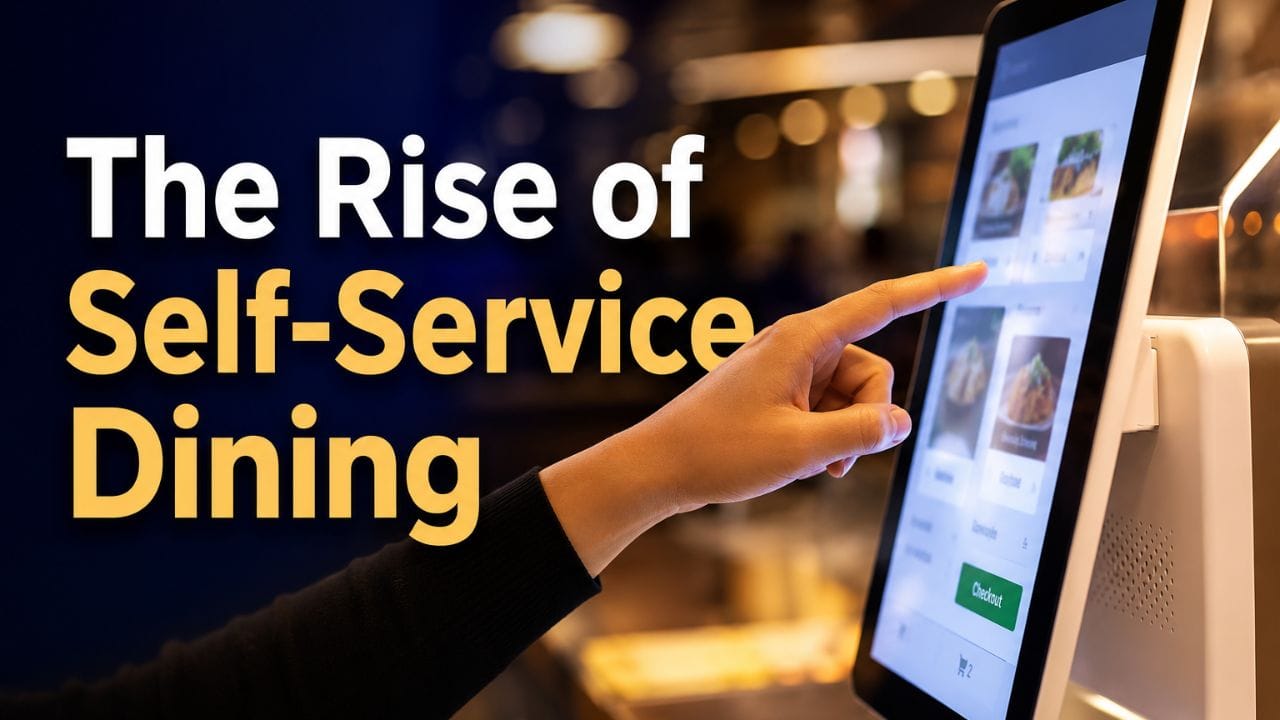
The way customers interact with restaurants has changed dramatically over the last decade.
From self-order kiosks and QR code menus to tableside tablets and mobile payments, diners increasingly expect convenience, speed, and flexibility. At the same time, restaurant owners are looking for ways to improve efficiency, manage rising labor costs, and create better guest experiences.
Self-service dining has evolved from a convenience into a competitive advantage.
This updated guide expands on Buzztime’s original article by exploring today’s self-service technologies, customer expectations, and hospitality trends shaping restaurants in 2026.
What Is Self-Service Dining?
Self-service dining allows customers to complete parts—or even all—of their dining experience using technology rather than relying entirely on staff.
Common examples include:
- Self-order kiosks
- QR code menus
- Mobile ordering apps
- Tableside ordering tablets
- Contactless payment systems
- Digital loyalty programs
Rather than replacing hospitality, these technologies help streamline routine tasks so staff can focus on delivering exceptional service.
Why Self-Service Dining Continues to Grow
Several industry trends have accelerated adoption.
Restaurants face:
- Rising labor costs
- Ongoing staffing shortages
- Increased demand for convenience
- Higher customer expectations
- Growing use of smartphones
Meanwhile, today’s guests are comfortable placing orders, paying bills, and customizing meals through digital platforms.
For many customers, self-service is no longer viewed as a novelty—it’s an expectation.
The Benefits of Self-Service Dining
Faster Service
Customers can browse menus, customize meals, and place orders immediately without waiting for a server.
During busy hours, this reduces congestion while improving the overall dining experience.
Increased Order Accuracy
Digital ordering minimizes communication errors between customers and staff.
Guests can review every item before submitting their order, reducing mistakes and improving satisfaction.
Higher Average Check Sizes
Self-service technology consistently encourages guests to add extras.
Automated prompts can recommend:
- Appetizers
- Desserts
- Premium drinks
- Combo meals
- Add-ons
- Upgrades
Unlike people, technology never forgets to upsell.
Improved Labor Efficiency
Self-service doesn’t eliminate employees—it allows them to spend more time where they create the most value.
Instead of processing payments or entering orders, staff can focus on:
- Greeting guests
- Delivering food
- Solving problems
- Building relationships
- Creating memorable experiences
Better Customer Control
Many diners appreciate setting their own pace.
They can:
- Browse menus longer
- Customize meals
- Split checks
- Pay when ready
- Avoid waiting for the bill
Greater control often leads to a more satisfying dining experience.
Challenges Restaurants Should Consider
Like any technology, self-service solutions require thoughtful implementation.
Potential challenges include:
- Initial equipment costs
- Staff training
- Technology maintenance
- Customer adoption
- Accessibility considerations
The goal isn’t replacing human interaction—it’s enhancing it where appropriate.
Self-Service Doesn’t Mean Less Hospitality
One of the biggest misconceptions is that technology removes the personal touch.
In reality, many successful restaurants use self-service to improve hospitality.
When employees spend less time processing transactions, they have more opportunities to:
- Welcome guests
- Recommend menu items
- Handle special requests
- Resolve issues quickly
- Build stronger customer relationships
Technology should support great service—not replace it.
The Future of Self-Service Dining
Restaurant technology continues evolving rapidly.
Emerging innovations include:
- AI-powered menu recommendations
- Personalized loyalty offers
- Voice ordering
- Smart kitchen integration
- Digital waitlists
- Predictive ordering
- Contactless payments
- Interactive table technology
Future systems will become even more personalized while helping restaurants operate more efficiently.
Interactive Entertainment Is Part of the Self-Service Experience
Modern guests expect more than convenient ordering.
They also want engaging experiences while they dine.
Interactive entertainment allows customers to stay engaged before meals arrive, during happy hour, or while spending time with friends.
This creates longer visits, stronger customer loyalty, and higher food and beverage sales.
How can Buzztime support self-service restaurants?
Buzztime enhances the guest experience by offering Network Trivia, Self-Hosted Trivia, arcade games, poker, bingo, and bets through smartphones or optional tablets. These interactive experiences help increase customer engagement, extend visit duration, and encourage repeat business.
Modernize Your Restaurant Experience
Request a free Buzztime demo today and discover how interactive trivia, arcade games, poker, bingo, and Predict the Pulse can complement your self-service restaurant while increasing customer engagement, repeat visits, and food and beverage sales.